[Client Impact]
Strategy and a Quality System Built for Scale
[Client Impact]
Strategy and a Quality System Built for Scale

Overview
Mount Kenya University retained ACAL during one of the most consequential phases of its institutional history. Coming off a five year period in which it had become one of Kenya's largest private universities, MKU needed a strategic plan that consolidated gains and positioned the institution for the next decade, supported by a quality management system that could hold standards constant across twelve campuses. ACAL led both engagements.
Five year strategic plan built on the Balanced Scorecard framework, organised around six pillars of excellence.
ISO 9001:2008 Business Management System implementation covering academic, administration, and operational processes.
Strategy and systems work delivered as a single integrated programme rather than as two separate engagements.
Output: institutional consolidation framework that has supported MKU's continued regional growth into a leading East African private university.
Client Context
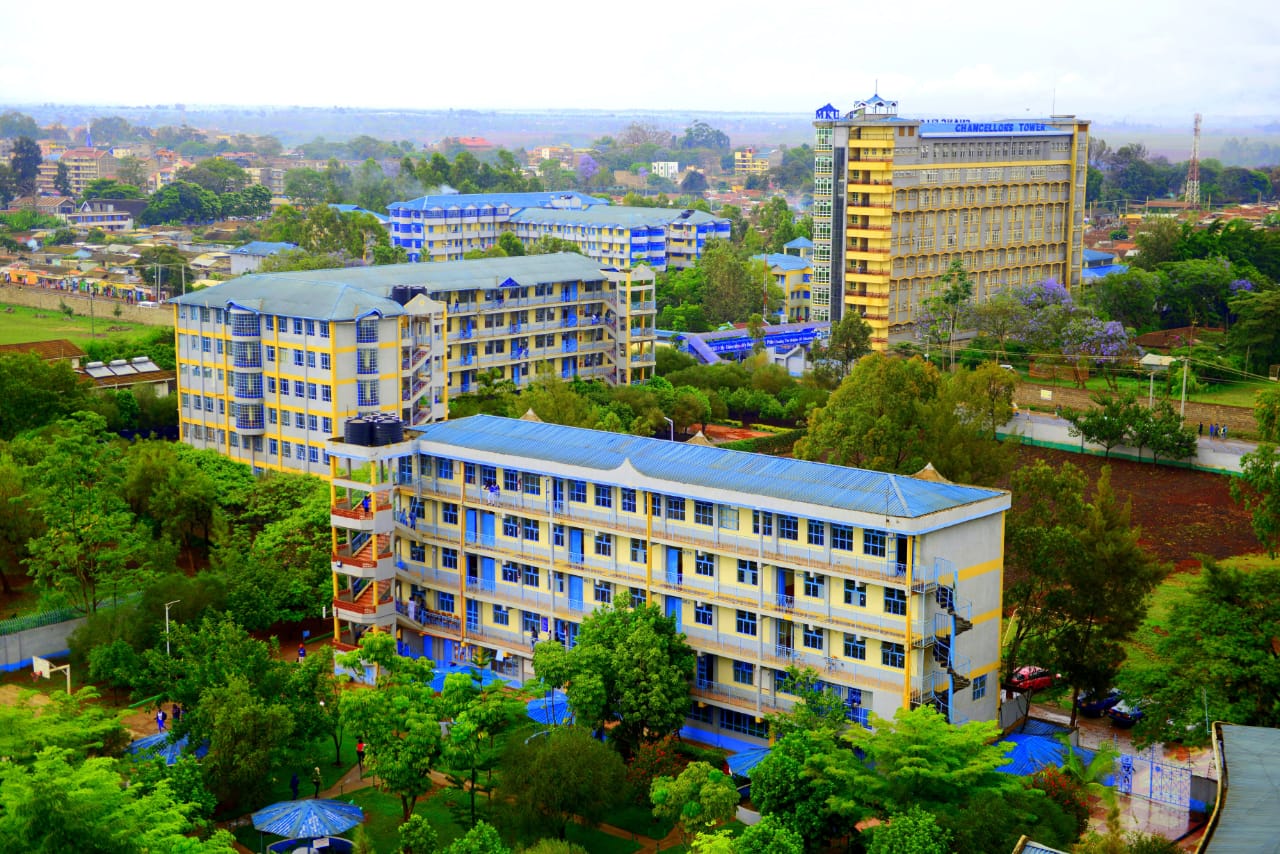
Mount Kenya University is the largest private university in Kenya and one of the largest in East Africa. Established to provide access to higher education for Kenyans who had been locked out of the public university system, MKU expanded faster than any peer institution between 2008 and 2014. In that period it received its university charter, opened twelve campuses, enrolled over forty thousand students (exceeding the target enrolment by more than six hundred per cent), expanded into medical and law programmes, established a regional campus in Kigali, opened three industrial parks, and set up an incubation unit for research and innovation.
Growth of that magnitude is rare in higher education globally. It is also strategically dangerous. Universities that expand at this pace without consolidating typically lose their quality differentiation, overstretch their balance sheet, and struggle to retain the institutional identity that made them attractive in the first place. MKU's leadership understood the risk and brought ACAL in to anchor the consolidation work.
The Challenge
Two challenges sat at the heart of the engagement. The first was strategic. After five years of growth that beat every internal target, MKU needed a five year plan that shifted the institution's posture from expansion to consolidation, without losing the entrepreneurial momentum that had driven the growth. The plan had to articulate what the next phase of MKU looked like, how the institution would measure success in that phase, and where the strategic investments would go.
The second was operational. Quality control across twelve campuses, multiple programmes, and a regional cross border footprint is a different problem from quality control on a single campus. Standards needed to be defined, codified, and enforced consistently across the institution. The benchmark MKU chose was the ISO 9001:2008 international quality management standard. Meeting that benchmark required a structured business management system, integrated across academic and administrative processes, with the monitoring infrastructure to keep it operational year on year.
Critically, the two challenges were not separable. The strategy needed the quality system to be credible. The quality system needed the strategy to give it direction. The engagement was designed around the link between the two.
Our Approach
ACAL ran the engagement as a single integrated workstream rather than as two parallel projects. The strategic plan and the business management system were developed together, with each informing the other, and both designed to be operational rather than ceremonial.
Situational analysis covering MKU's current position, growth performance, operating environment, and institutional culture.
Balanced Scorecard framework applied to define the strategic architecture and align financial, customer, learning and growth, and process dimensions.
Six Pillars of Excellence developed as the operational structure for the strategic plan: Teaching and Learning, Research and Innovation, Infrastructure, Student Welfare, Community Service, and Institutional Strengthening.
ISO 9001:2008 aligned business management system implemented across academic, administrative, and operational processes, with monitoring and evaluation built in.
Solution Delivered
ACAL delivered a five year strategic plan that gave MKU's leadership the institutional architecture to manage the transition from rapid expansion to disciplined consolidation. The plan was structured around the Six Pillars of Excellence, with each pillar carrying its own strategic objectives, measurable targets, sequenced investments, and accountability framework. Alongside the strategy, ACAL designed and implemented a comprehensive business management system aligned to ISO 9001:2008, covering process documentation, system manuals, quality controls, monitoring frameworks, and the institutional readiness needed for third party certification. Both products were developed with MKU's leadership and operational teams, ensuring institutional ownership rather than external imposition.
40K+
Students Within Strategic Scope
40K+
Students Within Strategic Scope
12
Campuses Aligned Under One System
12
Campuses Aligned Under One System
6
Pillars of Excellence Operationalised
6
Pillars of Excellence Operationalised
ISO 9001
Standard Implemented
ISO 9001
Standard Implemented

Impact
The strategy and the quality management system together gave MKU the institutional foundation to operate at a different scale. ISO 9001:2008 certification followed the implementation of the business management system, with standards held consistently across the institution's academic and administrative operations. Operational costs began to come under control. Service delivery quality improved. Brand perception strengthened.
Strategically, the Six Pillars architecture moved MKU into a clearer operating logic. Teaching and Learning, Research and Innovation, Infrastructure, Student Welfare, Community Service, and Institutional Strengthening became the lines of accountability and the locations of investment. The university adopted digital solutions in service delivery, including online registration and student affairs systems, producing measurable cost savings and operational efficiency. Strategic partnerships in science, research, and innovation expanded. The institutional reputation that had drawn students at scale was now backed by the operational discipline to deliver against it.
In the years since the engagement, MKU has continued to grow into one of the leading private universities in East Africa. The strategic and operational foundations laid in this work are part of the institutional architecture that supports that continued trajectory.
Key Takeaways
Consolidation strategy is harder than growth strategy
Universities that grow fast tend to attract attention and momentum. The strategic challenge they typically underestimate is the consolidation phase that follows. Growth strategy is about doing more. Consolidation strategy is about doing better and protecting what was built. MKU's leadership recognised this earlier than most peer institutions and brought in the strategy work at the right moment. That timing is what made the engagement work.
Strategy and quality systems belong in one engagement
Strategic plans and quality management systems are often delivered by different consultants on different timelines. Each ends up weaker for the separation. The strategy lacks the operational backbone the quality system would have given it. The quality system lacks the strategic direction the plan would have provided. The MKU engagement integrated the two, and that integration is what gave each product its strength.
The Balanced Scorecard works when adapted, not transplanted
The Balanced Scorecard is a strong strategic framework when applied with contextual adaptation. Transplanted directly from commercial settings into higher education, it produces less institutional value. The MKU strategy adapted the four BSC perspectives to the specific context of a fast growing private university operating across multiple campuses, and the Six Pillars of Excellence became the institution facing translation of the framework. The adaptation is what made it useful to the leadership team.
Institutional ownership of strategy is what makes it survive
Strategic plans that sit on shelves do not deliver consolidation. Strategic plans that the leadership team and operational managers own as their own document do. The MKU engagement was designed for institutional ownership from the outset. The leadership team, the operational managers, and the board were partners in the analytical process, not subjects of it. The strategy that emerged was theirs, and the operational adoption that followed is the evidence of that ownership.
Sector: Higher Education, Institutional Strategy, Quality Management | Client: Mount Kenya University | Geography: Kenya, with regional campus in Rwanda | ACAL Role: Lead Strategy and Business Management System Consultant
How We Helped Clients Grow Smarter
How We Helped Clients Grow Smarter
How We Helped Clients Grow Smarter

The Skills Gap Behind Off-Grid Energy
Fourteen underserved counties, one national energy programme, and the question every project appraisal document assumes has already been answered: can the institutions delivering this actually do it?

Counting What Flood Protection Delivered
Eight years of investment in flood mitigation and community-driven development across western Kenya, assessed where it either worked or did not: inside the households living on the floodplain.

Setting the Strategy for Kenya National Highways Authority
Building the 2023 to 2028 Strategic Plan for KENHA, translating a national mandate into vision, themes, objectives, and actions the institution can be measured against.

Positioning RCGW for the Decade of Water Scarcity
Evaluated five years of delivery and built the strategy that positions the Regional Centre on Groundwater Resources as a continental knowledge hub for the resource the Horn of Africa depends on most.

Selecting 2K+ Young Agripreneurs Across Kenya
ACAL designed and delivered the selection of 2,080 youth incubatees for the AfDB-financed ENABLE Youth Kenya agribusiness programme, using psychometric assessment across eight regional centres.

Building a Regional Framework for TVET
Inter-Institutional Collaboration Framework for EASTRIP TVET institutions, connecting training providers, governments, industry, and regulators across East Africa.
The Skills Gap Behind Off-Grid Energy
Fourteen underserved counties, one national energy programme, and the question every project appraisal document assumes has already been answered: can the institutions delivering this actually do it?
Counting What Flood Protection Delivered
Eight years of investment in flood mitigation and community-driven development across western Kenya, assessed where it either worked or did not: inside the households living on the floodplain.
Setting the Strategy for Kenya National Highways Authority
Building the 2023 to 2028 Strategic Plan for KENHA, translating a national mandate into vision, themes, objectives, and actions the institution can be measured against.
Positioning RCGW for the Decade of Water Scarcity
Evaluated five years of delivery and built the strategy that positions the Regional Centre on Groundwater Resources as a continental knowledge hub for the resource the Horn of Africa depends on most.
Selecting 2K+ Young Agripreneurs Across Kenya
ACAL designed and delivered the selection of 2,080 youth incubatees for the AfDB-financed ENABLE Youth Kenya agribusiness programme, using psychometric assessment across eight regional centres.
Building a Regional Framework for TVET
Inter-Institutional Collaboration Framework for EASTRIP TVET institutions, connecting training providers, governments, industry, and regulators across East Africa.
The Skills Gap Behind Off-Grid Energy
Fourteen underserved counties, one national energy programme, and the question every project appraisal document assumes has already been answered: can the institutions delivering this actually do it?
Counting What Flood Protection Delivered
Eight years of investment in flood mitigation and community-driven development across western Kenya, assessed where it either worked or did not: inside the households living on the floodplain.
Setting the Strategy for Kenya National Highways Authority
Building the 2023 to 2028 Strategic Plan for KENHA, translating a national mandate into vision, themes, objectives, and actions the institution can be measured against.
Positioning RCGW for the Decade of Water Scarcity
Evaluated five years of delivery and built the strategy that positions the Regional Centre on Groundwater Resources as a continental knowledge hub for the resource the Horn of Africa depends on most.
Selecting 2K+ Young Agripreneurs Across Kenya
ACAL designed and delivered the selection of 2,080 youth incubatees for the AfDB-financed ENABLE Youth Kenya agribusiness programme, using psychometric assessment across eight regional centres.
Building a Regional Framework for TVET
Inter-Institutional Collaboration Framework for EASTRIP TVET institutions, connecting training providers, governments, industry, and regulators across East Africa.
The Skills Gap Behind Off-Grid Energy
Fourteen underserved counties, one national energy programme, and the question every project appraisal document assumes has already been answered: can the institutions delivering this actually do it?
Counting What Flood Protection Delivered
Eight years of investment in flood mitigation and community-driven development across western Kenya, assessed where it either worked or did not: inside the households living on the floodplain.
Setting the Strategy for Kenya National Highways Authority
Building the 2023 to 2028 Strategic Plan for KENHA, translating a national mandate into vision, themes, objectives, and actions the institution can be measured against.
Positioning RCGW for the Decade of Water Scarcity
Evaluated five years of delivery and built the strategy that positions the Regional Centre on Groundwater Resources as a continental knowledge hub for the resource the Horn of Africa depends on most.
Selecting 2K+ Young Agripreneurs Across Kenya
ACAL designed and delivered the selection of 2,080 youth incubatees for the AfDB-financed ENABLE Youth Kenya agribusiness programme, using psychometric assessment across eight regional centres.
Building a Regional Framework for TVET
Inter-Institutional Collaboration Framework for EASTRIP TVET institutions, connecting training providers, governments, industry, and regulators across East Africa.
The Skills Gap Behind Off-Grid Energy
Fourteen underserved counties, one national energy programme, and the question every project appraisal document assumes has already been answered: can the institutions delivering this actually do it?
Counting What Flood Protection Delivered
Eight years of investment in flood mitigation and community-driven development across western Kenya, assessed where it either worked or did not: inside the households living on the floodplain.
Setting the Strategy for Kenya National Highways Authority
Building the 2023 to 2028 Strategic Plan for KENHA, translating a national mandate into vision, themes, objectives, and actions the institution can be measured against.
Positioning RCGW for the Decade of Water Scarcity
Evaluated five years of delivery and built the strategy that positions the Regional Centre on Groundwater Resources as a continental knowledge hub for the resource the Horn of Africa depends on most.
Selecting 2K+ Young Agripreneurs Across Kenya
ACAL designed and delivered the selection of 2,080 youth incubatees for the AfDB-financed ENABLE Youth Kenya agribusiness programme, using psychometric assessment across eight regional centres.
Building a Regional Framework for TVET
Inter-Institutional Collaboration Framework for EASTRIP TVET institutions, connecting training providers, governments, industry, and regulators across East Africa.
The Skills Gap Behind Off-Grid Energy
Fourteen underserved counties, one national energy programme, and the question every project appraisal document assumes has already been answered: can the institutions delivering this actually do it?
Counting What Flood Protection Delivered
Eight years of investment in flood mitigation and community-driven development across western Kenya, assessed where it either worked or did not: inside the households living on the floodplain.
Setting the Strategy for Kenya National Highways Authority
Building the 2023 to 2028 Strategic Plan for KENHA, translating a national mandate into vision, themes, objectives, and actions the institution can be measured against.
Positioning RCGW for the Decade of Water Scarcity
Evaluated five years of delivery and built the strategy that positions the Regional Centre on Groundwater Resources as a continental knowledge hub for the resource the Horn of Africa depends on most.
Selecting 2K+ Young Agripreneurs Across Kenya
ACAL designed and delivered the selection of 2,080 youth incubatees for the AfDB-financed ENABLE Youth Kenya agribusiness programme, using psychometric assessment across eight regional centres.
Building a Regional Framework for TVET
Inter-Institutional Collaboration Framework for EASTRIP TVET institutions, connecting training providers, governments, industry, and regulators across East Africa.
The Skills Gap Behind Off-Grid Energy
Fourteen underserved counties, one national energy programme, and the question every project appraisal document assumes has already been answered: can the institutions delivering this actually do it?
Counting What Flood Protection Delivered
Eight years of investment in flood mitigation and community-driven development across western Kenya, assessed where it either worked or did not: inside the households living on the floodplain.
Setting the Strategy for Kenya National Highways Authority
Building the 2023 to 2028 Strategic Plan for KENHA, translating a national mandate into vision, themes, objectives, and actions the institution can be measured against.
Positioning RCGW for the Decade of Water Scarcity
Evaluated five years of delivery and built the strategy that positions the Regional Centre on Groundwater Resources as a continental knowledge hub for the resource the Horn of Africa depends on most.
Selecting 2K+ Young Agripreneurs Across Kenya
ACAL designed and delivered the selection of 2,080 youth incubatees for the AfDB-financed ENABLE Youth Kenya agribusiness programme, using psychometric assessment across eight regional centres.
Building a Regional Framework for TVET
Inter-Institutional Collaboration Framework for EASTRIP TVET institutions, connecting training providers, governments, industry, and regulators across East Africa.
The Skills Gap Behind Off-Grid Energy
Fourteen underserved counties, one national energy programme, and the question every project appraisal document assumes has already been answered: can the institutions delivering this actually do it?
Counting What Flood Protection Delivered
Eight years of investment in flood mitigation and community-driven development across western Kenya, assessed where it either worked or did not: inside the households living on the floodplain.
Setting the Strategy for Kenya National Highways Authority
Building the 2023 to 2028 Strategic Plan for KENHA, translating a national mandate into vision, themes, objectives, and actions the institution can be measured against.
Positioning RCGW for the Decade of Water Scarcity
Evaluated five years of delivery and built the strategy that positions the Regional Centre on Groundwater Resources as a continental knowledge hub for the resource the Horn of Africa depends on most.
Selecting 2K+ Young Agripreneurs Across Kenya
ACAL designed and delivered the selection of 2,080 youth incubatees for the AfDB-financed ENABLE Youth Kenya agribusiness programme, using psychometric assessment across eight regional centres.
Building a Regional Framework for TVET
Inter-Institutional Collaboration Framework for EASTRIP TVET institutions, connecting training providers, governments, industry, and regulators across East Africa.
The Skills Gap Behind Off-Grid Energy
Fourteen underserved counties, one national energy programme, and the question every project appraisal document assumes has already been answered: can the institutions delivering this actually do it?
Counting What Flood Protection Delivered
Eight years of investment in flood mitigation and community-driven development across western Kenya, assessed where it either worked or did not: inside the households living on the floodplain.
Setting the Strategy for Kenya National Highways Authority
Building the 2023 to 2028 Strategic Plan for KENHA, translating a national mandate into vision, themes, objectives, and actions the institution can be measured against.
Positioning RCGW for the Decade of Water Scarcity
Evaluated five years of delivery and built the strategy that positions the Regional Centre on Groundwater Resources as a continental knowledge hub for the resource the Horn of Africa depends on most.
Selecting 2K+ Young Agripreneurs Across Kenya
ACAL designed and delivered the selection of 2,080 youth incubatees for the AfDB-financed ENABLE Youth Kenya agribusiness programme, using psychometric assessment across eight regional centres.
Building a Regional Framework for TVET
Inter-Institutional Collaboration Framework for EASTRIP TVET institutions, connecting training providers, governments, industry, and regulators across East Africa.
The Skills Gap Behind Off-Grid Energy
Fourteen underserved counties, one national energy programme, and the question every project appraisal document assumes has already been answered: can the institutions delivering this actually do it?
Counting What Flood Protection Delivered
Eight years of investment in flood mitigation and community-driven development across western Kenya, assessed where it either worked or did not: inside the households living on the floodplain.
Setting the Strategy for Kenya National Highways Authority
Building the 2023 to 2028 Strategic Plan for KENHA, translating a national mandate into vision, themes, objectives, and actions the institution can be measured against.
Positioning RCGW for the Decade of Water Scarcity
Evaluated five years of delivery and built the strategy that positions the Regional Centre on Groundwater Resources as a continental knowledge hub for the resource the Horn of Africa depends on most.
Selecting 2K+ Young Agripreneurs Across Kenya
ACAL designed and delivered the selection of 2,080 youth incubatees for the AfDB-financed ENABLE Youth Kenya agribusiness programme, using psychometric assessment across eight regional centres.
Building a Regional Framework for TVET
Inter-Institutional Collaboration Framework for EASTRIP TVET institutions, connecting training providers, governments, industry, and regulators across East Africa.
The Skills Gap Behind Off-Grid Energy
Fourteen underserved counties, one national energy programme, and the question every project appraisal document assumes has already been answered: can the institutions delivering this actually do it?
Counting What Flood Protection Delivered
Eight years of investment in flood mitigation and community-driven development across western Kenya, assessed where it either worked or did not: inside the households living on the floodplain.
Setting the Strategy for Kenya National Highways Authority
Building the 2023 to 2028 Strategic Plan for KENHA, translating a national mandate into vision, themes, objectives, and actions the institution can be measured against.
Positioning RCGW for the Decade of Water Scarcity
Evaluated five years of delivery and built the strategy that positions the Regional Centre on Groundwater Resources as a continental knowledge hub for the resource the Horn of Africa depends on most.
Selecting 2K+ Young Agripreneurs Across Kenya
ACAL designed and delivered the selection of 2,080 youth incubatees for the AfDB-financed ENABLE Youth Kenya agribusiness programme, using psychometric assessment across eight regional centres.
Building a Regional Framework for TVET
Inter-Institutional Collaboration Framework for EASTRIP TVET institutions, connecting training providers, governments, industry, and regulators across East Africa.
The Skills Gap Behind Off-Grid Energy
Fourteen underserved counties, one national energy programme, and the question every project appraisal document assumes has already been answered: can the institutions delivering this actually do it?
Counting What Flood Protection Delivered
Eight years of investment in flood mitigation and community-driven development across western Kenya, assessed where it either worked or did not: inside the households living on the floodplain.
Setting the Strategy for Kenya National Highways Authority
Building the 2023 to 2028 Strategic Plan for KENHA, translating a national mandate into vision, themes, objectives, and actions the institution can be measured against.
Positioning RCGW for the Decade of Water Scarcity
Evaluated five years of delivery and built the strategy that positions the Regional Centre on Groundwater Resources as a continental knowledge hub for the resource the Horn of Africa depends on most.
Selecting 2K+ Young Agripreneurs Across Kenya
ACAL designed and delivered the selection of 2,080 youth incubatees for the AfDB-financed ENABLE Youth Kenya agribusiness programme, using psychometric assessment across eight regional centres.
Building a Regional Framework for TVET
Inter-Institutional Collaboration Framework for EASTRIP TVET institutions, connecting training providers, governments, industry, and regulators across East Africa.
Change the Game
Work with Experts to Change the Game
Work with Experts to Change the Game
40+ major programmes delivered
100% project completion rate
GCF accredited · One of 54 worldwide