[Client Impact]
Horn of Africa Gateway Development Project
[Client Impact]
Horn of Africa Gateway Development Project

Overview
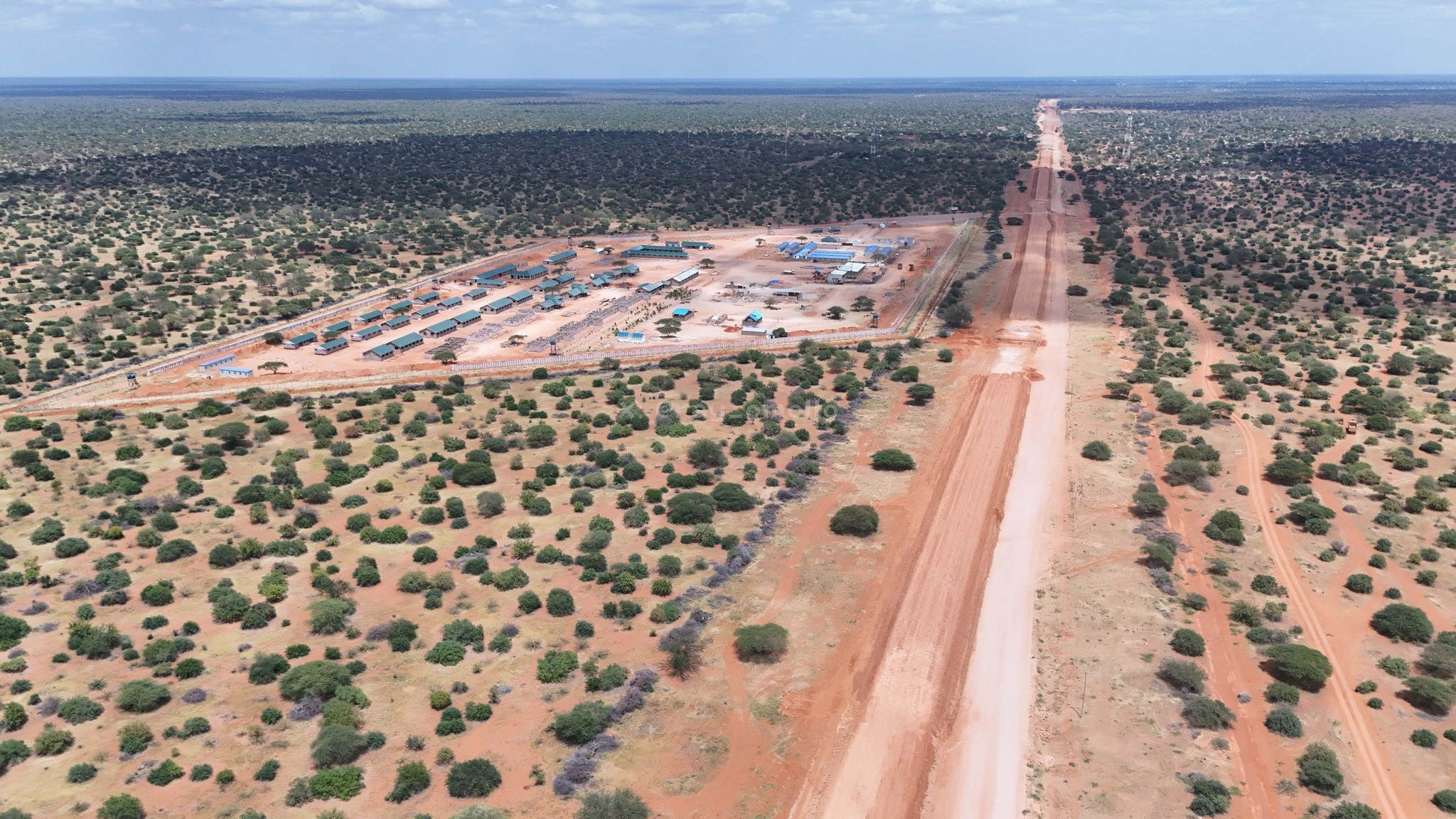
The Horn of Africa Gateway Development Project is Kenya's most consequential road investment in the north-eastern region: a US $841 million programme to upgrade the Isiolo–Mandera highway to bitumen standard across 740km, financed jointly by the World Bank, the African Development Bank, and the Government of Kenya. The road connects Kenya to Somalia and Ethiopia along the Mombasa–Garissa–Wajir–Mandera–Mogadishu corridor, a critical artery for regional trade, humanitarian access, and economic integration of a region long isolated from the rest of the country.
Beyond the road itself, the project allocated resources to the social infrastructure and services needed by communities along the corridor. KeNHA engaged ACAL to lead that needs assessment: to map what existed, determine what was missing, and produce a prioritised, costed, and community-validated programme of social investments that would accompany the road upgrade.
347 existing social infrastructure assets mapped across the 740km corridor within a 500-metre radius of the road
10 community awareness forums held across 5 counties, reaching 614 community representatives
16 community identification forums conducted across 17 sub-counties, generating 680 project proposals
103 priority projects selected and costed, with a total value of USD 27.8M, across water, health, education, trade, and community amenities

Client Context
Kenya National Highways Authority is the state agency responsible for the development, rehabilitation, and maintenance of Kenya’s national road network. The HoAGDP is one of its most complex active projects, spanning 5 counties- Isiolo, Meru, Garissa, Wajir, and Mandera - that together constitute the country’s north-eastern frontier. The region is classified as arid and semi-arid, predominantly pastoralist, and among the most marginalized in Kenya by income, service access, and infrastructure provision.
The World Bank’s financing came with binding safeguard obligations. The project triggered Operational Policy 4.10 on Indigenous Peoples and Vulnerable and Marginalized Groups, covering the Borana, Somali, and Turkana communities living along the corridor. It also triggered OP 4.12 on Involuntary Resettlement. Both policies required that affected communities be engaged through a process of free, prior, and informed consultation, and that the social infrastructure programme reflect genuinely community-owned priorities rather than consultant-imposed assumptions.
The Challenge
The challenge was not simply to produce a list of infrastructure needs. It was to produce one that would hold up to World Bank scrutiny, survive political pressure from county and national governments, and reflect the actual priorities of communities that are geographically dispersed, ethnically diverse, and in some cases in active conflict with one another.
The corridor passes through 17 sub-counties and 39 administrative wards. Within those wards, the project area included communities with deep inter-clan and inter-ethnic tensions, between Borana and Somali communities in parts of Isiolo and Garissa, and across pastoral boundary disputes elsewhere. Any engagement process that failed to account for those tensions would produce skewed proposals or, worse, communities that would reject the infrastructure that was eventually built.
The infrastructure gap was real but unmapped. No current database of social infrastructure assets existed along the corridor. Before community proposals could be evaluated, ACAL had to establish a baseline: what water sources, health facilities, schools, markets, and communication infrastructure already existed within the project area, and in what condition. Without that baseline, there was no defensible basis for deciding which proposals were genuine gaps and which duplicated existing provision.
The resource envelope was fixed. The USD 27.8M budget had to be allocated across five counties, seventeen sub-counties, and a population whose proposals totalled 680 projects, many of them legitimate, most of them more than the budget could accommodate. A prioritisation process without clear, transparent, and community-accepted criteria would produce allocations that communities would contest and that the World Bank would not approve.
Our Approach
ACAL structured the engagement across four sequential phases, each building on the one before. The process began with a reconnaissance visit in August 2020 covering the entire 740km corridor, the foundation for everything that followed.
Phase I — Mapping and Preparation
Phase II — Community and Stakeholder Engagement
Phase III — Project Identification and Costing
Phase IV — Validation
Mapping and Preparation
A thorough desk review of all relevant documents was completed, including Environmental and Social Impact Assessment reports, Resettlement Action Plans for each road section, County Integrated Development Plans for Isiolo, Wajir, and Mandera, and the Vulnerable and Marginalized Groups Frameworks. A physical reconnaissance of the full corridor produced a baseline map of 347 existing social infrastructure assets — classified by sector, condition, and location — against which community proposals would later be assessed.
Community and Stakeholder Engagement
Ten community awareness forums were held across the five counties, reaching 614 representatives and ensuring communities understood the programme before being asked to identify priorities. Sixteen community identification forums followed, covering all 17 sub-counties, with 442 community representatives participating. Separate focus group discussions were conducted with women and special groups in every county to ensure that the proposals did not simply reflect the priorities of male community leaders. Where inter-clan tensions made joint forums impractical, ACAL held separate meetings to avoid distorting the consultation process.
Project Identification and Costing
From the 680 proposals received, ACAL undertook a two-step screening exercise in consultation with county and national government technical officers. Projects were assessed against a defined set of criteria, population served, availability of land, proximity to existing provision, resource envelope, environmental concerns, conflict risk, and local capacity to sustain the infrastructure. The 103 projects that passed the screening were each taken through feasibility assessment, preliminary design, and cost estimation. The total prioritised programme was costed at USD 27.8M.
Validation
All prioritised projects were returned to communities through a series of validation workshops, ensuring that the final list reflected what communities had actually asked for and that they were committed to the management and maintenance arrangements that would sustain the infrastructure after construction.
Solution Delivered
ACAL delivered the Final Needs Assessment Report for the HoAGDP social infrastructure programme: a complete, World Bank-compliant prioritised infrastructure programme covering five counties along the 740km corridor, adopted by KeNHA and accepted by the World Bank as the basis for social infrastructure investment under the project.
The report contained a baseline inventory of existing social infrastructure, sector-by-sector gap analysis, the full documentation of community engagement including attendance records and meeting minutes, the prioritised list of 103 projects with designs, specifications, and cost estimates, a project sustainability and management matrix for each infrastructure category, a monitoring and evaluation framework, a conflict dimensions assessment, a gender equity and VMG participation plan, and environmental and social impact screening for all proposed projects.
Community Liaison Committees were established at ward and sub-county level to provide the institutional platform for ongoing stakeholder engagement during the construction phase and long-term infrastructure management after the project closes.
347
Existing assets mapped
347
Existing assets mapped
680
Community proposals received
680
Community proposals received
103
Priority projects selected
103
Priority projects selected
17
Sub-counties covered
17
Sub-counties covered

Impact
The needs assessment established the factual and participatory foundation for one of the largest community infrastructure investments in Kenya’s north-eastern region. The 103 projects, 41 in water, 28 in health, 26 in education, 5 in trade facilitation, and 3 in community amenities, represent priorities that communities proposed, validated, and committed to sustaining.
For a region where infrastructure delivery has historically been top-down and disconnected from community needs, the participatory methodology mattered as much as the output. The engagement reached 614 community representatives in awareness forums and 442 in project identification forums, with youth constituting 32% of participants and women engaged through dedicated focus groups across all five counties.
The project also produced the institutional architecture for implementation: Community Liaison Committees at ward and sub-county level, sustainability matrices for every infrastructure category, and a monitoring and evaluation framework that gives KeNHA, the World Bank, and county governments a structured basis for tracking whether the investments deliver what communities expected.
Key Takeaways
Infrastructure needs assessments in marginalised regions require a conflict-sensitive engagement design
The Isiolo–Mandera corridor is not a homogeneous community. It is a geography of overlapping pastoral communities, cross-border dynamics, inter-clan tensions, and long-standing resource disputes. An engagement process designed for a stable urban context would fail here. ACAL’s design recognised this from the outset: mapping conflict dimensions, designing venue selection around community safety, holding separate forums where joint engagement would suppress minority voices, and building conflict risk into the project prioritisation criteria. The result is a programme that communities own because the process respected the conditions under which they actually live.
Baseline mapping before proposal collection changes the quality of community engagement
Communities that know what already exists in their area make different and better proposals than communities asked to identify needs in an information vacuum. ACAL’s reconnaissance-based inventory of 347 existing assets meant that community forums began with shared factual grounding. It reduced duplication in the proposals received and gave ACAL a defensible basis for screening out proposals that overlapped with existing provision rather than filling genuine gaps.
World Bank safeguard compliance is a methodology, not a documentation exercise
Meeting the requirements of OP 4.10 and OP 4.12 requires a process that is genuinely participatory, not one that generates the documentation of participation while decisions are made elsewhere. The separation of awareness forums from identification forums, the systematic engagement of women and youth through dedicated focus groups, the establishment of Community Liaison Committees, and the validation workshops that returned prioritised projects to communities before finalisation were all design choices that reflect the substance of the safeguard requirements, not just their form.
Prioritisation frameworks that communities understand produce infrastructure that communities maintain
A project list produced by technical experts and handed to communities for endorsement is not the same as a project list that communities produced and experts validated. ACAL’s prioritisation criteria, population served, land availability, conflict risk, sustainability capacity, proximity to existing provisio, were applied transparently and explained to community representatives at every stage. When the final list of 103 projects was presented for validation, communities could see why their proposals had been selected or deferred. That transparency is the foundation of the management commitment that sustains infrastructure after the construction contract closes.
Sector: Infrastructure, Social Development, World Bank Safeguards | Client: Kenya National Highways Authority | Geography: Isiolo to Mandera, 5 Counties, North-Eastern Kenya | ACAL Role: Lead Consultant — Social Infrastructure Needs Assessment | Programme Value Costed: USD 27.8M | Reference: KENHA/2157/2019
How We Helped Clients Grow Smarter
How We Helped Clients Grow Smarter
How We Helped Clients Grow Smarter

The Skills Gap Behind Off-Grid Energy
Fourteen underserved counties, one national energy programme, and the question every project appraisal document assumes has already been answered: can the institutions delivering this actually do it?

Counting What Flood Protection Delivered
Eight years of investment in flood mitigation and community-driven development across western Kenya, assessed where it either worked or did not: inside the households living on the floodplain.
Setting the Strategy for Kenya National Highways Authority
Building the 2023 to 2028 Strategic Plan for KENHA, translating a national mandate into vision, themes, objectives, and actions the institution can be measured against.

Positioning RCGW for the Decade of Water Scarcity
Evaluated five years of delivery and built the strategy that positions the Regional Centre on Groundwater Resources as a continental knowledge hub for the resource the Horn of Africa depends on most.

Selecting 2K+ Young Agripreneurs Across Kenya
ACAL designed and delivered the selection of 2,080 youth incubatees for the AfDB-financed ENABLE Youth Kenya agribusiness programme, using psychometric assessment across eight regional centres.

Building a Regional Framework for TVET
Inter-Institutional Collaboration Framework for EASTRIP TVET institutions, connecting training providers, governments, industry, and regulators across East Africa.
The Skills Gap Behind Off-Grid Energy
Fourteen underserved counties, one national energy programme, and the question every project appraisal document assumes has already been answered: can the institutions delivering this actually do it?
Counting What Flood Protection Delivered
Eight years of investment in flood mitigation and community-driven development across western Kenya, assessed where it either worked or did not: inside the households living on the floodplain.
Setting the Strategy for Kenya National Highways Authority
Building the 2023 to 2028 Strategic Plan for KENHA, translating a national mandate into vision, themes, objectives, and actions the institution can be measured against.
Positioning RCGW for the Decade of Water Scarcity
Evaluated five years of delivery and built the strategy that positions the Regional Centre on Groundwater Resources as a continental knowledge hub for the resource the Horn of Africa depends on most.
Selecting 2K+ Young Agripreneurs Across Kenya
ACAL designed and delivered the selection of 2,080 youth incubatees for the AfDB-financed ENABLE Youth Kenya agribusiness programme, using psychometric assessment across eight regional centres.
Building a Regional Framework for TVET
Inter-Institutional Collaboration Framework for EASTRIP TVET institutions, connecting training providers, governments, industry, and regulators across East Africa.
The Skills Gap Behind Off-Grid Energy
Fourteen underserved counties, one national energy programme, and the question every project appraisal document assumes has already been answered: can the institutions delivering this actually do it?
Counting What Flood Protection Delivered
Eight years of investment in flood mitigation and community-driven development across western Kenya, assessed where it either worked or did not: inside the households living on the floodplain.
Setting the Strategy for Kenya National Highways Authority
Building the 2023 to 2028 Strategic Plan for KENHA, translating a national mandate into vision, themes, objectives, and actions the institution can be measured against.
Positioning RCGW for the Decade of Water Scarcity
Evaluated five years of delivery and built the strategy that positions the Regional Centre on Groundwater Resources as a continental knowledge hub for the resource the Horn of Africa depends on most.
Selecting 2K+ Young Agripreneurs Across Kenya
ACAL designed and delivered the selection of 2,080 youth incubatees for the AfDB-financed ENABLE Youth Kenya agribusiness programme, using psychometric assessment across eight regional centres.
Building a Regional Framework for TVET
Inter-Institutional Collaboration Framework for EASTRIP TVET institutions, connecting training providers, governments, industry, and regulators across East Africa.
The Skills Gap Behind Off-Grid Energy
Fourteen underserved counties, one national energy programme, and the question every project appraisal document assumes has already been answered: can the institutions delivering this actually do it?
Counting What Flood Protection Delivered
Eight years of investment in flood mitigation and community-driven development across western Kenya, assessed where it either worked or did not: inside the households living on the floodplain.
Setting the Strategy for Kenya National Highways Authority
Building the 2023 to 2028 Strategic Plan for KENHA, translating a national mandate into vision, themes, objectives, and actions the institution can be measured against.
Positioning RCGW for the Decade of Water Scarcity
Evaluated five years of delivery and built the strategy that positions the Regional Centre on Groundwater Resources as a continental knowledge hub for the resource the Horn of Africa depends on most.
Selecting 2K+ Young Agripreneurs Across Kenya
ACAL designed and delivered the selection of 2,080 youth incubatees for the AfDB-financed ENABLE Youth Kenya agribusiness programme, using psychometric assessment across eight regional centres.
Building a Regional Framework for TVET
Inter-Institutional Collaboration Framework for EASTRIP TVET institutions, connecting training providers, governments, industry, and regulators across East Africa.
The Skills Gap Behind Off-Grid Energy
Fourteen underserved counties, one national energy programme, and the question every project appraisal document assumes has already been answered: can the institutions delivering this actually do it?
Counting What Flood Protection Delivered
Eight years of investment in flood mitigation and community-driven development across western Kenya, assessed where it either worked or did not: inside the households living on the floodplain.
Setting the Strategy for Kenya National Highways Authority
Building the 2023 to 2028 Strategic Plan for KENHA, translating a national mandate into vision, themes, objectives, and actions the institution can be measured against.
Positioning RCGW for the Decade of Water Scarcity
Evaluated five years of delivery and built the strategy that positions the Regional Centre on Groundwater Resources as a continental knowledge hub for the resource the Horn of Africa depends on most.
Selecting 2K+ Young Agripreneurs Across Kenya
ACAL designed and delivered the selection of 2,080 youth incubatees for the AfDB-financed ENABLE Youth Kenya agribusiness programme, using psychometric assessment across eight regional centres.
Building a Regional Framework for TVET
Inter-Institutional Collaboration Framework for EASTRIP TVET institutions, connecting training providers, governments, industry, and regulators across East Africa.
The Skills Gap Behind Off-Grid Energy
Fourteen underserved counties, one national energy programme, and the question every project appraisal document assumes has already been answered: can the institutions delivering this actually do it?
Counting What Flood Protection Delivered
Eight years of investment in flood mitigation and community-driven development across western Kenya, assessed where it either worked or did not: inside the households living on the floodplain.
Setting the Strategy for Kenya National Highways Authority
Building the 2023 to 2028 Strategic Plan for KENHA, translating a national mandate into vision, themes, objectives, and actions the institution can be measured against.
Positioning RCGW for the Decade of Water Scarcity
Evaluated five years of delivery and built the strategy that positions the Regional Centre on Groundwater Resources as a continental knowledge hub for the resource the Horn of Africa depends on most.
Selecting 2K+ Young Agripreneurs Across Kenya
ACAL designed and delivered the selection of 2,080 youth incubatees for the AfDB-financed ENABLE Youth Kenya agribusiness programme, using psychometric assessment across eight regional centres.
Building a Regional Framework for TVET
Inter-Institutional Collaboration Framework for EASTRIP TVET institutions, connecting training providers, governments, industry, and regulators across East Africa.
The Skills Gap Behind Off-Grid Energy
Fourteen underserved counties, one national energy programme, and the question every project appraisal document assumes has already been answered: can the institutions delivering this actually do it?
Counting What Flood Protection Delivered
Eight years of investment in flood mitigation and community-driven development across western Kenya, assessed where it either worked or did not: inside the households living on the floodplain.
Setting the Strategy for Kenya National Highways Authority
Building the 2023 to 2028 Strategic Plan for KENHA, translating a national mandate into vision, themes, objectives, and actions the institution can be measured against.
Positioning RCGW for the Decade of Water Scarcity
Evaluated five years of delivery and built the strategy that positions the Regional Centre on Groundwater Resources as a continental knowledge hub for the resource the Horn of Africa depends on most.
Selecting 2K+ Young Agripreneurs Across Kenya
ACAL designed and delivered the selection of 2,080 youth incubatees for the AfDB-financed ENABLE Youth Kenya agribusiness programme, using psychometric assessment across eight regional centres.
Building a Regional Framework for TVET
Inter-Institutional Collaboration Framework for EASTRIP TVET institutions, connecting training providers, governments, industry, and regulators across East Africa.
The Skills Gap Behind Off-Grid Energy
Fourteen underserved counties, one national energy programme, and the question every project appraisal document assumes has already been answered: can the institutions delivering this actually do it?
Counting What Flood Protection Delivered
Eight years of investment in flood mitigation and community-driven development across western Kenya, assessed where it either worked or did not: inside the households living on the floodplain.
Setting the Strategy for Kenya National Highways Authority
Building the 2023 to 2028 Strategic Plan for KENHA, translating a national mandate into vision, themes, objectives, and actions the institution can be measured against.
Positioning RCGW for the Decade of Water Scarcity
Evaluated five years of delivery and built the strategy that positions the Regional Centre on Groundwater Resources as a continental knowledge hub for the resource the Horn of Africa depends on most.
Selecting 2K+ Young Agripreneurs Across Kenya
ACAL designed and delivered the selection of 2,080 youth incubatees for the AfDB-financed ENABLE Youth Kenya agribusiness programme, using psychometric assessment across eight regional centres.
Building a Regional Framework for TVET
Inter-Institutional Collaboration Framework for EASTRIP TVET institutions, connecting training providers, governments, industry, and regulators across East Africa.
The Skills Gap Behind Off-Grid Energy
Fourteen underserved counties, one national energy programme, and the question every project appraisal document assumes has already been answered: can the institutions delivering this actually do it?
Counting What Flood Protection Delivered
Eight years of investment in flood mitigation and community-driven development across western Kenya, assessed where it either worked or did not: inside the households living on the floodplain.
Setting the Strategy for Kenya National Highways Authority
Building the 2023 to 2028 Strategic Plan for KENHA, translating a national mandate into vision, themes, objectives, and actions the institution can be measured against.
Positioning RCGW for the Decade of Water Scarcity
Evaluated five years of delivery and built the strategy that positions the Regional Centre on Groundwater Resources as a continental knowledge hub for the resource the Horn of Africa depends on most.
Selecting 2K+ Young Agripreneurs Across Kenya
ACAL designed and delivered the selection of 2,080 youth incubatees for the AfDB-financed ENABLE Youth Kenya agribusiness programme, using psychometric assessment across eight regional centres.
Building a Regional Framework for TVET
Inter-Institutional Collaboration Framework for EASTRIP TVET institutions, connecting training providers, governments, industry, and regulators across East Africa.
The Skills Gap Behind Off-Grid Energy
Fourteen underserved counties, one national energy programme, and the question every project appraisal document assumes has already been answered: can the institutions delivering this actually do it?
Counting What Flood Protection Delivered
Eight years of investment in flood mitigation and community-driven development across western Kenya, assessed where it either worked or did not: inside the households living on the floodplain.
Setting the Strategy for Kenya National Highways Authority
Building the 2023 to 2028 Strategic Plan for KENHA, translating a national mandate into vision, themes, objectives, and actions the institution can be measured against.
Positioning RCGW for the Decade of Water Scarcity
Evaluated five years of delivery and built the strategy that positions the Regional Centre on Groundwater Resources as a continental knowledge hub for the resource the Horn of Africa depends on most.
Selecting 2K+ Young Agripreneurs Across Kenya
ACAL designed and delivered the selection of 2,080 youth incubatees for the AfDB-financed ENABLE Youth Kenya agribusiness programme, using psychometric assessment across eight regional centres.
Building a Regional Framework for TVET
Inter-Institutional Collaboration Framework for EASTRIP TVET institutions, connecting training providers, governments, industry, and regulators across East Africa.
The Skills Gap Behind Off-Grid Energy
Fourteen underserved counties, one national energy programme, and the question every project appraisal document assumes has already been answered: can the institutions delivering this actually do it?
Counting What Flood Protection Delivered
Eight years of investment in flood mitigation and community-driven development across western Kenya, assessed where it either worked or did not: inside the households living on the floodplain.
Setting the Strategy for Kenya National Highways Authority
Building the 2023 to 2028 Strategic Plan for KENHA, translating a national mandate into vision, themes, objectives, and actions the institution can be measured against.
Positioning RCGW for the Decade of Water Scarcity
Evaluated five years of delivery and built the strategy that positions the Regional Centre on Groundwater Resources as a continental knowledge hub for the resource the Horn of Africa depends on most.
Selecting 2K+ Young Agripreneurs Across Kenya
ACAL designed and delivered the selection of 2,080 youth incubatees for the AfDB-financed ENABLE Youth Kenya agribusiness programme, using psychometric assessment across eight regional centres.
Building a Regional Framework for TVET
Inter-Institutional Collaboration Framework for EASTRIP TVET institutions, connecting training providers, governments, industry, and regulators across East Africa.
The Skills Gap Behind Off-Grid Energy
Fourteen underserved counties, one national energy programme, and the question every project appraisal document assumes has already been answered: can the institutions delivering this actually do it?
Counting What Flood Protection Delivered
Eight years of investment in flood mitigation and community-driven development across western Kenya, assessed where it either worked or did not: inside the households living on the floodplain.
Setting the Strategy for Kenya National Highways Authority
Building the 2023 to 2028 Strategic Plan for KENHA, translating a national mandate into vision, themes, objectives, and actions the institution can be measured against.
Positioning RCGW for the Decade of Water Scarcity
Evaluated five years of delivery and built the strategy that positions the Regional Centre on Groundwater Resources as a continental knowledge hub for the resource the Horn of Africa depends on most.
Selecting 2K+ Young Agripreneurs Across Kenya
ACAL designed and delivered the selection of 2,080 youth incubatees for the AfDB-financed ENABLE Youth Kenya agribusiness programme, using psychometric assessment across eight regional centres.
Building a Regional Framework for TVET
Inter-Institutional Collaboration Framework for EASTRIP TVET institutions, connecting training providers, governments, industry, and regulators across East Africa.
Change the Game
Work with Experts to Change the Game
Work with Experts to Change the Game
40+ major programmes delivered
100% project completion rate
GCF accredited · One of 54 worldwide