[Insight]
The Treasury Single Account Reaches the Counties
[Insight]
The Treasury Single Account Reaches the Counties

Opening Perspective
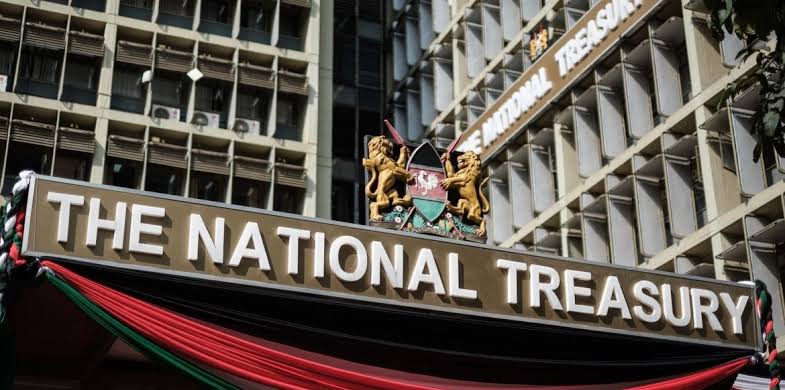
Public financial management reforms rarely produce a number clean enough to settle an argument. The Treasury Single Account has produced one. Following rollout across national government ministries, departments, and agencies, the cost of overdraft financing from the Central Bank of Kenya fell by 61 percent in the current financial year. That is not a projection or a modelled saving. It is money the exchequer stopped paying to borrow cash it already owned, held in accounts scattered across the commercial banking system.
From 1 July 2026, the same architecture extends to the 47 county governments. The policy logic is identical and the operational consequences are not, because counties are not miniature ministries. They collect their own revenue, run their own payrolls, and manage relationships with commercial banks that have shaped county financial practice since devolution began. This is the most consequential change to county financial operations in a decade, and much of the public commentary has treated it as an accounting adjustment.
What the Reform Actually Does
A Treasury Single Account consolidates government cash holdings into a unified structure at the Central Bank, replacing a landscape of separate operating accounts held across commercial banks. The entity retains its own ledger and its own spending authority. What changes is where the cash physically sits and who has visibility over it.
The mechanics of the county rollout began with information gathering. A National Treasury circular dated 15 February 2026 directed ministries, departments, agencies, and counties to submit details of every bank account they operate, an exercise whose purpose is not subtle. Government cannot consolidate accounts it does not know exist, and the phrase used in coverage of the reform, the targeting of county accounts that had escaped central visibility, describes the actual problem. Alongside the account census, the Intergovernmental Budget and Economic Council approved corrective action plans intended to strengthen county financial management ahead of the transition.
Three shifts follow from consolidation. Idle balances stop being idle, because cash pooled at the Central Bank offsets the government’s borrowing requirement rather than sitting in a commercial deposit. Visibility becomes real time, replacing the reporting cycle through which cash positions were previously assembled after the fact. And commercial banks lose the county deposit base that has been a meaningful source of low-cost funding, which is why the reform has commercial as well as fiscal implications.
Float is not a treasury strategy, but in many institutions it has quietly functioned as one. The Treasury Single Account removes the cushion and exposes what was underneath it: how accurately an entity can forecast its own cash.

ACAL Advisory Team
Public Sector Advisory
Key Insights
1. The 61 percent is the argument, and it will be difficult to contest
Fiscal reforms usually fail politically because their benefits are diffuse and their costs are concentrated. The overdraft saving at national level inverts that: a single, auditable figure attributable to one reform. It gives Treasury an evidence base for extending the model and makes resistance harder to sustain on principle. Counties objecting to the transition will find themselves arguing against a number rather than a theory, which shifts the debate toward implementation terms rather than the reform itself.
2. Float has been an unacknowledged part of county liquidity management
Balances distributed across commercial accounts have functioned as an informal buffer, smoothing the gap between revenue timing and payment obligations. Consolidation removes that cushion and replaces it with a requirement: an entity must now know what it needs and when. Float is not a treasury strategy, but in many institutions it has quietly functioned as one. The reform exposes what was underneath it, which is how accurately an entity can forecast its own cash.
3. Cash forecasting becomes a core county competency overnight
Under a single account, exchequer releases and payment execution depend on credible, timely cash plans. Counties with functioning treasury units, disciplined commitment control, and procurement calendars aligned to cash availability will operate with little friction. Counties that have managed cash reactively, paying whoever presents and whatever the balance allows, will experience the transition as constant payment delay. The difference is not fiscal capacity. It is planning capability, and it is unevenly distributed across the 47.
4. Own-source revenue is where the reform will bite hardest
Counties collect revenue from parking, markets, land rates, and service charges, often through arrangements involving multiple collection accounts. Routing these into a consolidated structure improves transparency and closes leakage, which is precisely why it will be the most contested element of the transition. The counties that pre-emptively rationalise their revenue collection architecture will have a far easier passage than those waiting for the requirement to reach them.
5. Procurement timing has to be rebuilt around cash visibility
When cash was held locally, a department could commit against a balance it could see in its own account. Under consolidation, commitment must be sequenced against exchequer release schedules. Procurement plans that ignore this will generate pending bills, which are already the most persistent problem in county finance and the one most likely to be blamed on the reform rather than on the planning failure that produced them.
6. This is one reform action inside a larger conditionality package
The Treasury Single Account directive sits within the reform matrix of the World Bank’s USD 750 million development policy operation approved on 29 June. Implementation is therefore observed by a financier with disbursement decisions attached. County-level failure is no longer contained at county level, which raises both the support counties should expect and the scrutiny they will receive.
What This Means
For county treasuries. The immediate work is a cash management readiness review: a complete account inventory, a rebuilt cash forecasting capability, commitment controls that prevent spending ahead of release, and a procurement calendar synchronised to exchequer timing. Counties that complete this in the first quarter of the transition will avoid the payment backlogs that will otherwise define their year.
For county assemblies and oversight bodies. Consolidation increases transparency, which increases the quality of oversight possible. Assemblies should expect and demand better cash reporting, because the data now exists in a form that was previously unavailable.
For the National Treasury and IGBEC. The reform’s success depends on the exchequer release process being as reliable as it now requires counties to be. Consolidation transfers liquidity risk from counties to the centre, and if releases become unpredictable, the reform will be blamed for service delivery failures it did not cause.
For commercial banks. The loss of county deposits removes a low-cost funding base and shifts the county relationship toward transactional and advisory services. Banks that anticipated this have already begun repositioning.
The Implications for ACAL’s Clients
County public financial management capability is ground ACAL has covered exhaustively. The firm has served as Independent Verification Agency for the Annual Capacity and Performance Assessment across all 47 counties under the Kenya Devolution Support Programme, and delivered successive annual performance assessments of 45 counties and 79 municipalities under the Kenya Urban Support Programme. That work assesses precisely the systems the Treasury Single Account now stress-tests: planning, budgeting, commitment control, reporting, and monitoring.
The assessment record also predicts the transition. Counties that score well on public financial management have the treasury capability consolidation demands. Counties that do not will struggle, and the gap between them is documented rather than speculative.
For county governments, the relevant support is TSA readiness assessment, cash forecasting and commitment control system design, revenue architecture rationalisation, and procurement calendar alignment. For national bodies, implementation monitoring and county capability diagnostics. For financiers, independent verification of reform implementation at county level.
Closing Perspective
Kenya has proved the Treasury Single Account works at national scale, with a 61 percent reduction in overdraft costs that few reforms can match for clarity. Extending it to the counties is the harder half, because it lands on 47 institutions of widely varying capability, each with its own revenue streams, payment obligations, and banking relationships. The reform will not fail on design. It will succeed or struggle county by county, on the unglamorous question of whether a county treasury can say, credibly and in advance, what it needs and when it needs it. That capability was always the foundation of sound public financial management. The single account has simply made it impossible to do without.
Strategic Insights That Drive Business Success
Strategic Insights That Drive Business Success
Strategic Insights That Drive Business Success