[Insight]
Reading the FY2026/27 Budget: Where Government Money Meets Donor Money
[Insight]
Reading the FY2026/27 Budget: Where Government Money Meets Donor Money

Opening Perspective
Kenya's FY2026/27 budget, presented to Parliament on 11 June, commits KES 4.7 trillion against a revenue projection of KES 3.53 trillion. That gap is not a footnote. It is the single most important number in the document, because it determines how every ministry, county, and state agency will actually get things done this year. When domestic revenue covers three quarters of ambition, the balance comes from borrowing, from development partners, and from private capital. The institutions that understand how to work at that intersection will deliver. The ones that treat the printed estimates as guaranteed cash will spend the year issuing revised procurement plans.
Context
The budget carries the theme of sustaining the Bottom-Up Economic Transformation Agenda amid global uncertainty, and the government projects GDP growth of 5.3 percent in 2026 on the back of favourable weather, improved agricultural productivity, and climate-smart investment. The priority allocations tell a consistent story. Education takes the largest single share at KES 784.5 billion. Energy, infrastructure, and ICT together receive KES 531.3 billion. Health receives KES 177.2 billion, affordable housing KES 135.7 billion, and agriculture KES 111.7 billion.
Read as a list, these are just numbers. Read against the financing environment, they describe where government money and donor money will have to meet.
Budgets announce intentions. Financing structures reveal them. The real FY2026/27 budget will be written in negotiations with financiers, in county absorption rates, and in the delivery records of individual institutions.

ACAL Advisory Team
Development Finance Advisory Practice
Key Insights
1. The deficit makes co-financing the operating model, not the exception
With expenditure at KES 4.7 trillion and revenue at KES 3.53 trillion, roughly a quarter of the budget depends on financing beyond taxes. In practice, that means the development projects that move fastest will be those already aligned to donor instruments. IDA21 is live through 2028 with 45 percent of its envelope tagged for climate. Mission 300 partners have pledged tens of billions of dollars for African energy. The Green Climate Fund has shown, through the KCB approval, that Kenyan institutions can access it at scale. Ministries and agencies that structure their programmes to plug into these instruments will find their budget lines bankable. Those that do not will compete for a shrinking discretionary pool.
2. The energy and infrastructure allocation is a matching commitment
The KES 531.3 billion for energy, infrastructure, and ICT should be read as Kenya's stake in a much larger table. The World Bank Group has committed to directing up to USD 30 billion toward Africa's energy sector by 2030, and Mission 300 announced 50 million new connections in June. Domestic allocations of this kind are what unlock concessional flows, because financiers fund governments that co-invest. The transmission, generation, and last-mile programmes that can demonstrate absorption capacity will attract multiples of their budget lines.
3. Housing is now an execution story
KES 135.7 billion for affordable housing settles the question of political commitment. What remains open is delivery capability. The programme's success now rests on the institutions charged with executing it, on their leadership, their project management capacity, and their ability to manage land, credit, and construction pipelines simultaneously. The quality of institutional staffing and governance will matter more than any further policy refinement.
4. Agriculture's allocation is smaller than its mandate, climate finance is the bridge
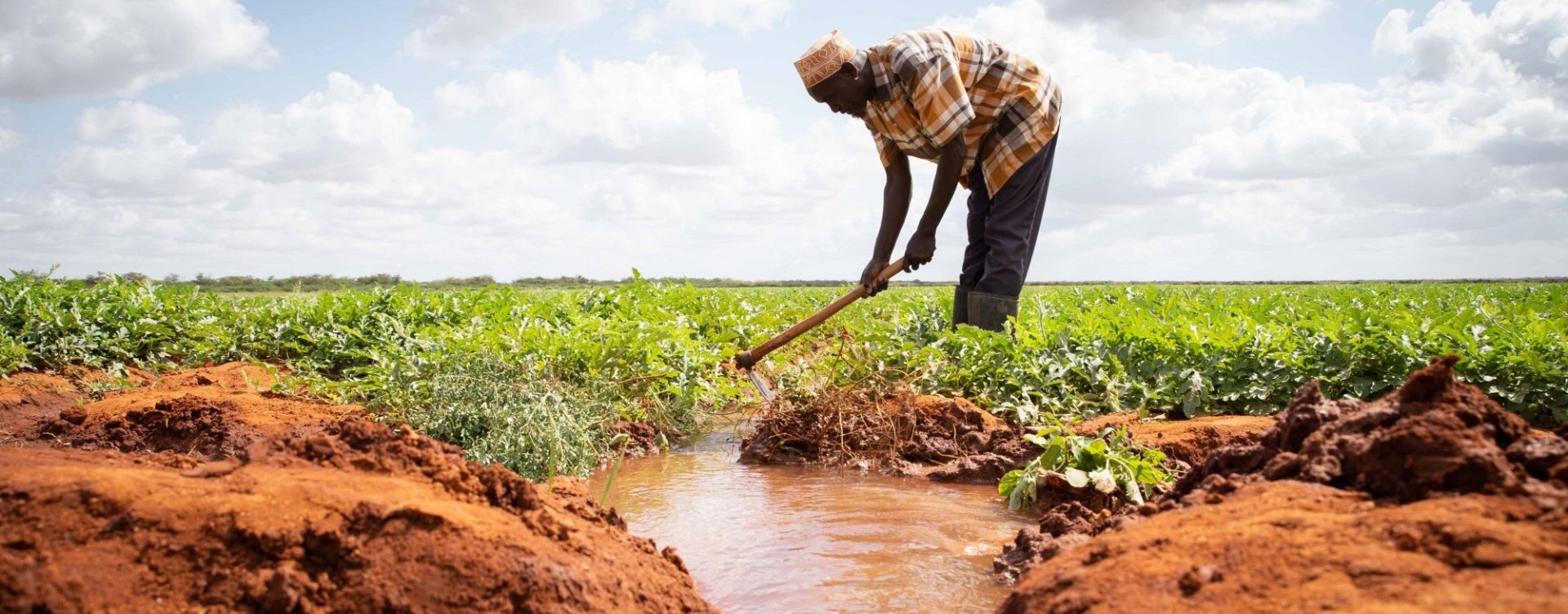
At KES 111.7 billion, agriculture receives less than a third of what energy and infrastructure command, yet the sector carries the budget's growth assumptions. The strategy leans on climate-smart agriculture, livestock productivity, and scaled agricultural insurance. These are precisely the areas where climate finance instruments are designed to top up domestic allocations. Counties and agencies that can package agricultural programmes as climate adaptation will effectively double their budgets. Those that cannot will find the allocation thin.
5. Counties remain the delivery layer, and capacity decides absorption
Most of what this budget promises reaches citizens through the counties. More than a decade of capacity and performance assessments across all 47 counties shows a consistent pattern: the difference between counties that absorb development finance and those that return it is institutional, not political. Public financial management discipline, functioning M&E systems, and credible planning documents are what donors and Treasury alike reward. The budget's ambitions will be realised county by county, and unevenly.
Implications
For government agencies, the practical question this budget poses is not what was allocated but what can be leveraged. Every shilling in the estimates should be treated as an anchor for concessional and private co-financing. For development partners, the alignment between Kenya's stated priorities and the major global instruments has rarely been tighter, which makes this a year to move pipelines rather than strategies. For the institutions in between, boards, parastatals, and county governments, the premium is on demonstrable delivery capability, because that is now the scarcest resource in the system.
Closing Perspective
Budgets announce intentions. Financing structures reveal them. The FY2026/27 estimates commit Kenya to an expansive development programme that its own revenues cannot fully carry, which means the real budget will be written over the coming year in negotiations with financiers, in county absorption rates, and in the delivery records of individual institutions. The organisations that thrive in that environment share one trait: they treat execution capability as infrastructure, built deliberately and maintained continuously. That is where the work is.
Strategic Insights That Drive Business Success
Strategic Insights That Drive Business Success
Strategic Insights That Drive Business Success