[Insight]
Mission 300 Is Repricing Africa's Energy Sector. Kenya Should Move First
[Insight]
Mission 300 Is Repricing Africa's Energy Sector. Kenya Should Move First

Opening Perspective
In June, the World Bank and the African Development Bank announced that Mission 300 had connected over 50 million people to electricity across Africa, a third of the way toward its target of 300 million new connections by 2030. Behind the milestone sits a larger structural shift: the World Bank Group is directing up to USD 30 billion toward Africa's energy sector this decade, and the delivery model has changed. Money now flows through national energy compacts, against reform commitments and measurable delivery, with private capital expected to carry a growing share. For Kenya, which paired its own KES 531.3 billion energy, infrastructure, and ICT allocation with these global flows in the FY2026/27 budget, the question is not whether resources are available. It is which institutions will be ready to absorb them.
What Mission 300 Actually Changes
Mission 300 is not a traditional lending programme. It is a compact-based mobilisation. Participating countries prepare national energy compacts that commit to specific reforms: cost-reflective and predictable tariff paths, financially viable utilities, streamlined procurement of distributed renewable energy, and open frameworks for private participation. In return, concessional finance, guarantees, and technical support are sequenced against delivery.
Three features distinguish this wave from previous electrification pushes. First, the connection model is technology-plural. Grid extension, mini-grids, and solar home systems are treated as one portfolio, with the least-cost option deployed per settlement. Second, the private sector is structural, not decorative. Distributed renewable energy companies, independent power producers, and commercial financiers are expected to deliver a large share of connections, which makes the regulatory environment itself a financed reform area. Third, utilities are the gatekeepers. The financial health, governance, and operational capability of national utilities determine whether compact commitments convert into disbursements.
Kenya enters this environment with real advantages: one of Africa's highest electrification rates, a deep independent power sector, a globally distinctive geothermal base, and an established transmission company. It also enters with the familiar constraints of utility financial pressure, transmission bottlenecks, and last-mile economics that defeat simple grid extension.
The financing is no longer the scarce resource. Institutional readiness is. The utilities that can evidence governance, creditworthiness, and delivery capability will absorb multiples of their historic funding.

ACAL Advisory Team
Climate Finance Practice
Key Insights
1. Compacts convert governance into capital
The countries drawing the largest Mission 300 allocations are those whose compacts carry credible reform commitments and whose institutions can evidence delivery. This is the same lesson the climate finance market taught through the GCF: accreditation-grade governance is the entry ticket. For Kenya's energy institutions, board effectiveness, audited performance, and transparent procurement are no longer internal matters. They are financing variables.
2. Transmission is the binding constraint, and the quiet opportunity
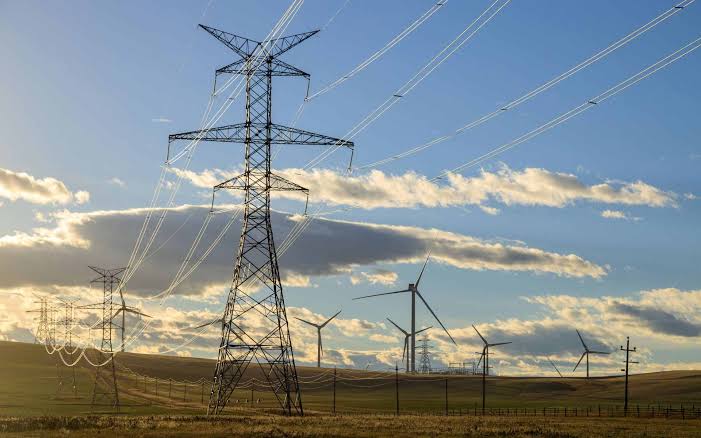
Connections targets concentrate attention on distribution and off-grid delivery, but every additional gigawatt of generation and every new industrial load depends on transmission capacity that takes years to build. Transmission companies across the region are moving to the centre of national investment programmes, with new financing models including public private partnerships for transmission lines now tested on the continent. Institutions that strengthened their quality management and delivery systems early will carry the credibility this moment demands.
3. The delivery frontier is institutional, not technical
The technologies are proven and the capital is committed. What separates countries that hit compact targets from those that do not is institutional: utility turnaround, regulatory predictability, land and wayleave management, and the capacity of subnational governments to plan and facilitate last-mile programmes. This is precisely the terrain where advisory work shifts from engineering studies to institutional strengthening, governance, and performance measurement.
4. Counties are becoming energy actors
Least-cost electrification increasingly runs through mini-grids and distributed systems whose siting, community engagement, and complementary infrastructure depend on county governments. Counties that integrate energy access into their development plans and present organised project pipelines will attract disproportionate shares of both public programmes and private developers.
5. Measurement will decide the narrative, and the next replenishment
A connection that does not power productive use is a statistic, not a transformation. Mission 300's financiers know this, and the programmes that sustain funding will be those that can evidence reliability, consumption growth, and economic impact, not just meter counts. Countries and utilities that build credible measurement and evaluation systems now will negotiate the next financing cycle from strength.
What This Means
For national government and utilities. Treat the energy compact as a portfolio of institutional reforms with financing attached, not a wish list. Sequencing matters: utility governance and financial recovery unlock everything else. Agencies that can show certified management systems, clean audits, and delivery track records will move to the front of the disbursement queue.
For counties. Energy access planning belongs in county integrated development plans now. Counties with organised settlement data, designated project sites, and functioning coordination units will be the ones developers and national programmes choose first.
For developers and financiers. The pipeline opportunity is real but institutionally gated. Due diligence on counterparty institutions, utilities, agencies, and counties, is as decisive as resource assessment. Partnerships that bring institutional strengthening alongside capital will outperform pure finance plays.
The Implications for ACAL's Clients
ACAL's energy credentials sit exactly at this institutional frontier. The firm guided KETRACO, Kenya's national transmission company, through ISO 9001 quality management certification, foundational work in building the delivery systems a compact-era transmission programme requires. Through its partnership with PowerGrid of India, one of the world's largest transmission utilities, ACAL brings cross-border delivery experience into the region precisely as transmission moves to the centre of the investment agenda. And its evaluation practice, built on World Bank implementation completion reporting and national programme assessment, is the measurement capability that compact financing rewards.
For utilities and agencies, the practical entry points are institutional readiness assessments, quality and governance systems, and performance measurement frameworks. For counties, energy access planning and pipeline organisation. For financiers and developers, counterparty due diligence and delivery monitoring.
Closing Perspective
Africa has waited decades for an energy financing wave of this scale, and it has arrived with conditions attached that are, on balance, the right ones: governance, viability, and measurable delivery. The financing is no longer the scarce resource. Institutional readiness is. The utilities that can evidence governance, creditworthiness, and delivery capability will absorb multiples of their historic funding, and the countries that understand this will treat institution building as energy policy. Kenya has the head start. It should use it.
Strategic Insights That Drive Business Success
Strategic Insights That Drive Business Success
Strategic Insights That Drive Business Success