[Insight]
Kenya Is Turning Refugee Camps Into Municipalities
[Insight]
Kenya Is Turning Refugee Camps Into Municipalities
Opening Perspective
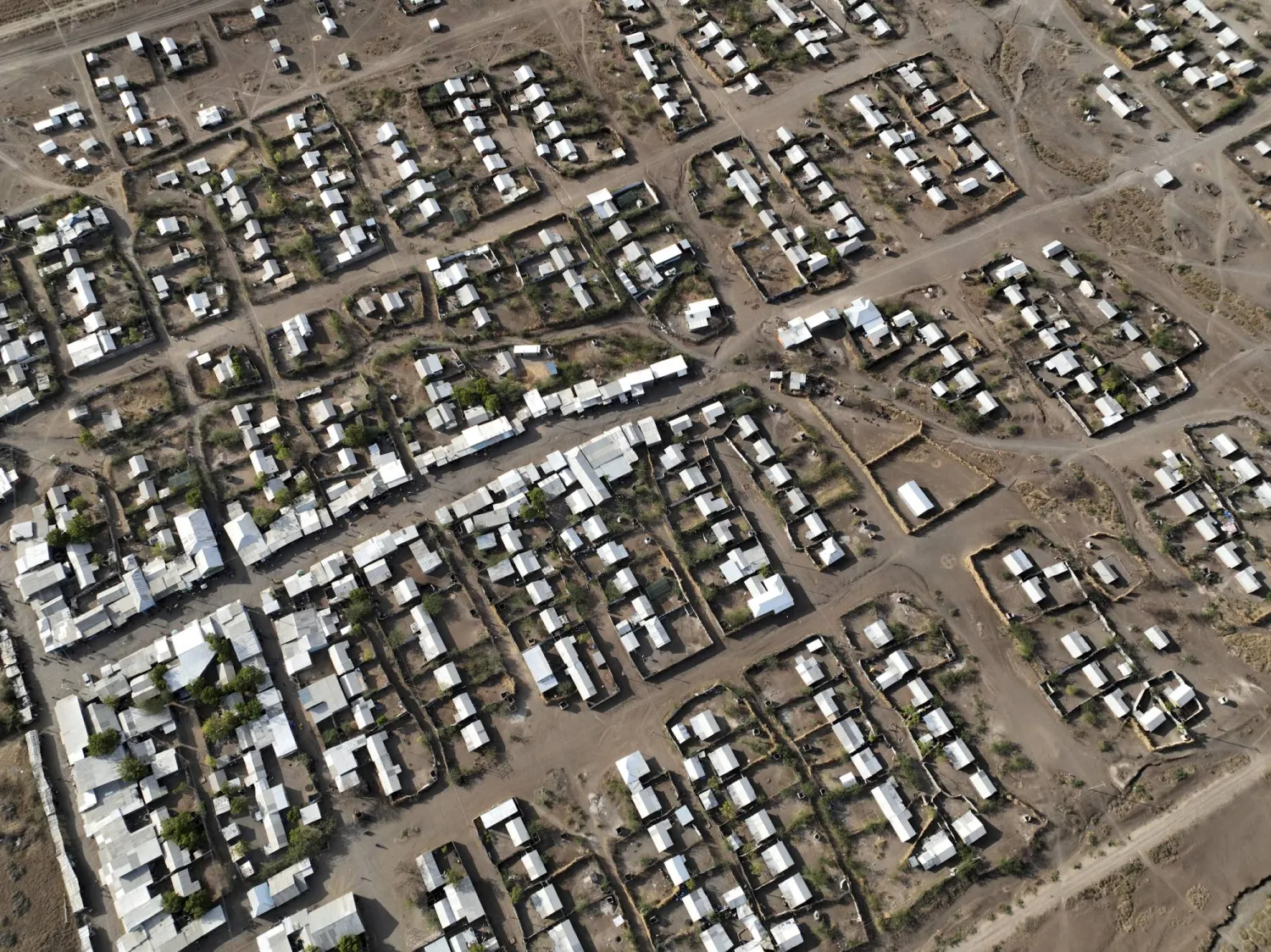
Kenya hosted 847,780 refugees and asylum seekers as of April 2026, concentrated in areas with the weakest labour markets, the thinnest infrastructure, and the highest exposure to climate shocks. For three decades the policy response was encampment, financed by humanitarian appeals renewed annually. The Shirika Plan, promulgated in March 2025, replaces that model with something structurally different: a government-led, development-oriented approach that closes camps by converting them into municipalities, and channels infrastructure financing through those municipalities rather than through humanitarian agencies.
The mechanism is the interesting part. Kenya did not invent a new institutional form for refugee-hosting areas. It applied the one it already uses for every other urban settlement, the chartered municipality with a board, an urban manager, and a budget vote, and made it the administrative channel through which World Bank and donor infrastructure financing flows. Whether that works is one of the more consequential questions in African displacement policy, and the answer will be institutional rather than humanitarian.
What the Plan Actually Does
The Shirika Plan is structured in three phases over eleven years, with the initial stage estimated at around USD 943 million, financed by the Government of Kenya, the World Bank, other donors, and private sector investors. Its purpose is the sustainable inclusion of both refugees and host communities into national and county systems, which is why the municipality is the chosen vehicle: municipalities are already inside those systems.
The timing is not coincidental. Humanitarian financing for Kenya’s refugee operation has contracted sharply, and the World Bank’s own analysis is direct about the consequence: without jobs, falling aid translates into deeper poverty rather than self-reliance, for host communities as much as for refugees. The Bank has been urged to deploy resources from its replenished Window for Host Communities and Refugees to support implementation of Kenya’s Refugee Act and the Shirika Plan, and the USD 750 million development policy operation approved in June carries dedicated livelihoods support for refugees and host communities.
So two things are happening simultaneously. The humanitarian financing model is failing, and a development financing model is being built to replace it. The Shirika Plan is the bridge, and municipalities are the load-bearing structure.
Encampment treats displacement as temporary for decades at a time. Municipalisation treats it as a settlement pattern requiring the same institutions every other settlement needs, which is either the most realistic policy in the region or the most demanding, depending on whether the institutions get built.

ACAL Advisory Team
Public Sector Advisory
Key Insights
1. Municipalisation is a financing decision before it is a policy decision
Development finance institutions lend to governments and their sub-national entities, not to camps. A camp has no legal personality, no budget vote, no board, and no capacity to hold a contract or account for a grant. A municipality has all four. Converting camps into municipalities is what makes the settlements eligible for the infrastructure financing the plan depends on, which is why the administrative form was chosen. The policy shift and the financing shift are the same decision.
2. The host community is half the design, and the politically decisive half
The plan covers refugees and host communities together, and that is not diplomatic framing. Turkana and Garissa communities have hosted large refugee populations for decades while receiving services thinner than the camps sometimes provided, which is the root of the local opposition the plan has encountered. A municipality serving both populations, with infrastructure benefiting both, is the only version that survives politically. Programmes that deliver visibly more to refugees than to neighbours produce resentment that outlasts the financing.
3. New municipalities enter an institutional system with real requirements
Kenya’s municipal framework demands a charter, an appointed board, an urban manager, and a separate budget vote, with annual independent performance assessment determining grant allocations. Shirika municipalities will face those same benchmarks in counties whose institutional capacity is already stretched. Establishing them is straightforward on paper and difficult in practice, and the assessment record shows exactly how difficult, because Kenya has been measuring municipal establishment for years.
4. Jobs are the outcome the whole model rests on
The World Bank’s assessment is that employment determines whether reduced aid becomes self-reliance or deeper poverty. That places economic inclusion, the right to work, access to markets and finance, and skills matched to actual local demand, at the centre of a plan whose visible components are infrastructure and administration. A well-built municipality with no labour market is a better-serviced poverty trap.
5. Land and integration are the unresolved questions
Municipalisation implies permanence, and permanence raises land questions that Kenyan law and local politics have not settled for refugee-hosting areas. Who holds title, what rights attach to occupation, and what happens to host community land claims are the issues most likely to stall implementation. They are also the issues least amenable to financing solutions, because they are political and legal rather than technical.
6. The model will be watched and copied across the region
Ethiopia, Uganda, and Sudan’s neighbours face versions of the same problem: protracted displacement, contracting humanitarian budgets, and host regions that are themselves underserved. Kenya is running the most institutionally ambitious response on the continent. If municipalisation delivers services and livelihoods at reasonable cost, it will become the regional template. If it produces municipalities that exist on paper, that will be instructive too.
What This Means
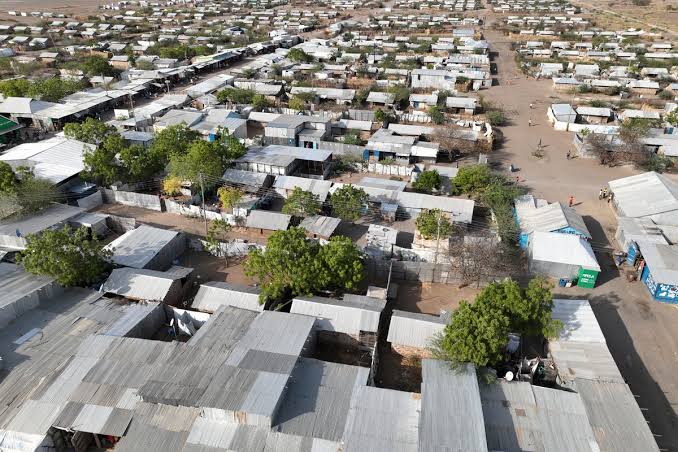
For the Department of Refugee Services and county governments. The core work is institutional establishment: charters, boards, urban managers, budget votes, and the planning and service delivery capability that follows. These are the conditions for financing, and county governments in Turkana and Garissa carry most of the delivery burden.
For the World Bank and development partners. The Window for Host Communities and Refugees and the livelihoods components of the current development policy operation are the instruments available. The binding constraint on absorbing them will be institutional capacity at municipal and county level, which makes capability investment the highest-leverage spend available.
For humanitarian agencies. The transition changes the role from service provision to supporting government systems, and the agencies that adapt earliest will remain relevant to a financing landscape that is shifting under them.
For the private sector. The plan explicitly anticipates private financing and enterprise. Municipalities with functioning administration, serviced land, and a working labour market are investable in a way camps never were.
The Implications for ACAL’s Clients
The capabilities this plan requires are the ones ACAL has built across Kenya’s urban and county systems. The firm has conducted annual performance assessments of 45 counties and 79 municipalities under the Second Kenya Urban Support Programme, delivered capacity needs assessments for municipalities under the Sustainable Urban Economic Development Programme, and undertaken socio-economic impact assessment of urban infrastructure across 59 municipalities. In the same regions the Shirika Plan covers, it led the social infrastructure and needs assessment for the Horn of Africa Gateway Development Project, spanning 740 kilometres and five counties, and delivered household-level impact assessment for community-driven development in vulnerable populations.
For counties and new municipal entities, the relevant support is establishment readiness, institutional capacity assessment, and urban planning. For national agencies and partners, needs assessment, programme design, and independent verification. For financiers, counterparty capability assessment before commitment.
Closing Perspective
Kenya is attempting to solve a thirty-year policy failure with an institutional instrument, and doing it while the financing model that sustained the old approach collapses. Encampment treats displacement as temporary for decades at a time. Municipalisation treats it as a settlement pattern requiring the same institutions every other settlement needs, which is either the most realistic policy in the region or the most demanding, depending on whether the institutions get built. The plan’s success will not be measured in camps closed. It will be measured in whether the municipalities that replace them can pass the same performance assessment as every other municipality in Kenya, and whether the people living in them can find work. Those are hard tests. They are also, finally, the right ones.
Strategic Insights That Drive Business Success
Strategic Insights That Drive Business Success
Strategic Insights That Drive Business Success